Every security camera you can buy has the same architecture problem. The camera is cheap, sometimes free with the subscription, because the camera is not the product. The vendor’s cloud is the product: it stores the footage, runs the detection, gates the features behind a monthly fee, and holds a permanent, searchable archive of the inside of your home on infrastructure you have no visibility into.
That architecture is why a camera vendor’s business decisions become your privacy problem — why a doorbell company can propose handing footage to police, and why a breach at the vendor is a breach of your living room.
Matter 1.5 is the first standard with a realistic shot at changing it. It is genuinely important. It is also more limited than the marketing will suggest, and the limits are exactly where you’d least want them.
What Matter 1.5 Adds
Finalized by the Connectivity Standards Alliance on November 20, 2025, Matter 1.5 introduced three long-missing device types: standalone security cameras (indoor and outdoor), video doorbells, and intercoms — alongside closures and expanded energy management.
For the first time, the specification defines how a camera exposes itself to any Matter controller:
- Live video and two-way audio over WebRTC, with STUN and TURN for remote access
- Motion events, plus person and package detection signals
- Multi-stream support and pan-tilt-zoom control
- Configurable detection and privacy zones
- Physical privacy controls — privacy shutters and night-vision toggles, exposed as standard controls rather than buried in a vendor app
- Flexible recording options
Read that list as an answer to the question “what has kept cameras proprietary?” The answer was always video transport and the event model. Standardizing both means a camera can, in principle, stream to a hub in your house instead of a datacenter — and that a controller you choose, not the camera vendor, decides what happens to the stream.
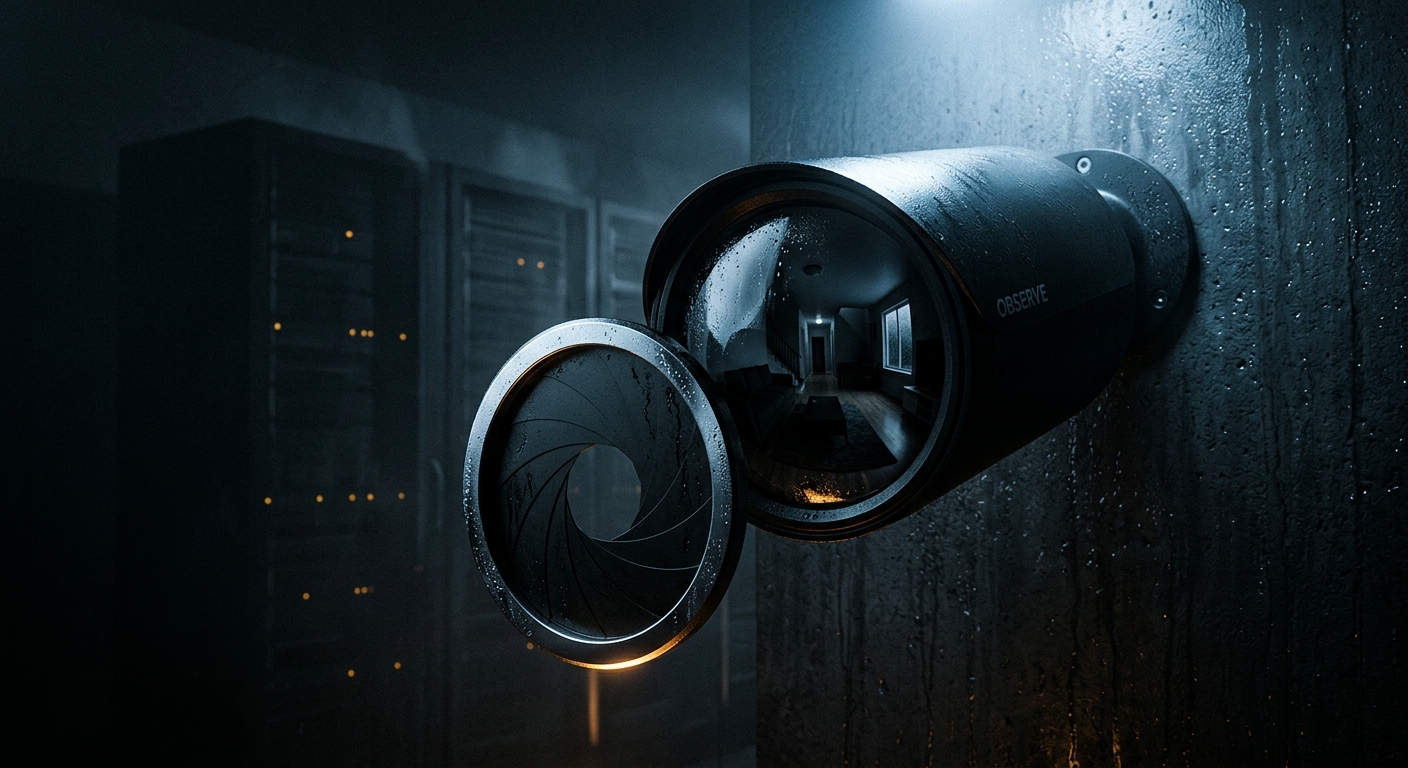
That the privacy shutter is a first-class standardized control is a small, telling detail. A shutter you can drive from your own hub, on your own schedule and automations, is meaningfully different from one that obeys the vendor’s app.
What Matter 1.5 Deliberately Does Not Cover
Here is the fine print, and it matters more than anything above.
Matter 1.5 does not standardize storage. Not where recordings live, not how long they are kept, not whether they leave your house. Cloud storage remains a per-brand subscription with per-brand terms.
Matter 1.5 does not standardize AI processing. Facial recognition, package detection, vehicle alerts, and the rest of the “smart” tier stay proprietary, which in practice means they stay in the vendor’s cloud, because that is where the vendor’s models run.
So a Matter-certified camera is guaranteed to interoperate. It is not guaranteed to be local. A camera can be fully Matter 1.5 certified while still uploading everything it sees to the manufacturer’s servers and charging you monthly for the privilege of watching it back.
Certification tells you the camera will talk to your hub. It tells you nothing about who else it talks to. If you take one thing from this article, take that.
The workaround is the same one it has always been: pair a camera that supports local streaming with a controller that can record locally, and verify the traffic yourself rather than trusting a badge on the box.
Who Actually Supports It in 2026
The specification is a year old. Adoption is thinner than that suggests.
| Status as of mid-2026 | |
|---|---|
| Samsung SmartThings | First and, as of June 2026, the only major controller shipping Matter 1.5 camera support |
| Apple Home | Committed, not shipped |
| Google Home | Committed, not shipped |
| Amazon Alexa | Committed, not shipped |
| Aqara Camera Hub G350 | First certified camera — $139.99, announced at CES 2026, now on sale, works via SmartThings |
| TP-Link Tapo | Models announced, awaiting firmware |
| Eve | On the roadmap, likely requiring new hardware |
| Ring, Nest, Blink | Absent from Matter camera certification entirely |
That last row is the one to sit with. The three biggest camera brands in American homes — the ones with the largest installed base and the most valuable footage archives — are not in the certification list. Interoperability is against their interest, because their business is the subscription and the ecosystem lock-in that a standard would dissolve. Apple, Google, and Amazon have historically been slow to enable new Matter device types even when they’ve committed, and a camera is the device type where they have the most to lose by moving fast.
Apple, meanwhile, is reported to be developing its own privacy-focused HomeKit security camera with on-device presence sensing, and possibly a Face ID doorbell. That reporting is unconfirmed and light on specifics — treat it as a rumor — but the direction is consistent: privacy is becoming a camera feature that companies compete on, which is new and welcome.
How to Buy a Camera in 2026
Ask where the video is recorded before you ask anything else. Local storage — microSD, NVR, or a hub with a drive — means the footage exists in your house. Cloud-only means it exists in someone else’s, permanently, under terms they can revise.
Treat “Matter certified” as an interoperability guarantee, not a privacy one. It means your hub can drive the camera. It does not mean the camera stopped phoning home.
Check the controller before the camera. Right now, buying a Matter 1.5 camera into an Apple Home or Google Home household gets you a device that works but feels crippled, because the controller hasn’t enabled the features. Match the camera to what your hub supports today, not what it has promised.
Prefer a physical privacy shutter, and prefer one you can control from your own automations now that the standard exposes it.
Verify rather than trust. Put the camera on an isolated VLAN and watch its outbound traffic for a week. A camera that claims local recording and maintains a constant encrypted uplink to a vendor cloud is telling you something the box didn’t. Our complete guide to securing your smart home network covers the segmentation, and the same discipline applies to every other appliance whose cloud you can’t audit.
Consider blocking the camera’s internet access entirely once local recording is working. If the hub is in your house and the storage is in your house, the vendor cloud is optional — and a camera that cannot reach the internet cannot leak footage to it, cannot be conscripted into a botnet, and cannot be remotely bricked when the vendor sunsets the product line.
The Hub Is the Real Decision
If local video is the goal, the camera matters less than the machine recording it. A Matter controller with local storage — a home server running Home Assistant, a NAS with an NVR role, a hub with a drive attached — is what actually keeps footage out of the cloud. The camera just needs to be willing to stream to it, and Matter 1.5 is what makes that willingness a standard feature rather than a vendor favor.
That makes your always-on home hub the most privacy-critical machine you own: it will hold the video archive that used to live on someone else’s servers. Worth choosing hardware you can actually trust at the firmware level — a NovaCustom NUC Box running open Dasharo coreboot firmware makes a good Home Assistant host for exactly this reason, and we made the longer argument for privacy-first control-plane hardware last month.
Bottom Line
Matter 1.5 is the most consequential thing to happen to camera privacy in years, because it removes the technical excuse for lock-in. Video transport, events, detection zones, and privacy shutters are now standard. A camera can talk to your hub instead of a vendor’s datacenter, and no manufacturer can claim it’s technically infeasible any more.
But the standard stops precisely where the money is. Storage and AI processing were left proprietary, which means the cloud subscription survives certification intact — and the three brands with the most cameras in American homes haven’t certified at all.
The standard opened the door. Walking through it is still a purchase decision you have to make deliberately, one camera and one hub at a time.
Sources
- CSA-IOT: Matter 1.5 Introduces Cameras, Closures, and Enhanced Energy Management Capabilities
- The Gadgeteer: Matter 1.5 Cameras and Doorbells — Smart Home Security in 2026
- Forbes: The First Ever Matter Smart Security Camera Is Here
- SmartThings Blog: SmartThings Expands Camera Support with Introduction of Matter 1.5
- Granite River Labs: Matter 1.5 Expands Smart Home Ecosystem with Cameras, Closures, and Energy-Management Intelligence
- Tom’s Guide: Matter 1.5 update launches with 3 new features, including security camera support
Affiliate disclosure: This article contains affiliate links. If you purchase through our links we may earn a commission at no extra cost to you.